How to Start Trading From Scratch by Copying a Repeatable Beginner Routine Instead of Hunting for a Perfect Strategy
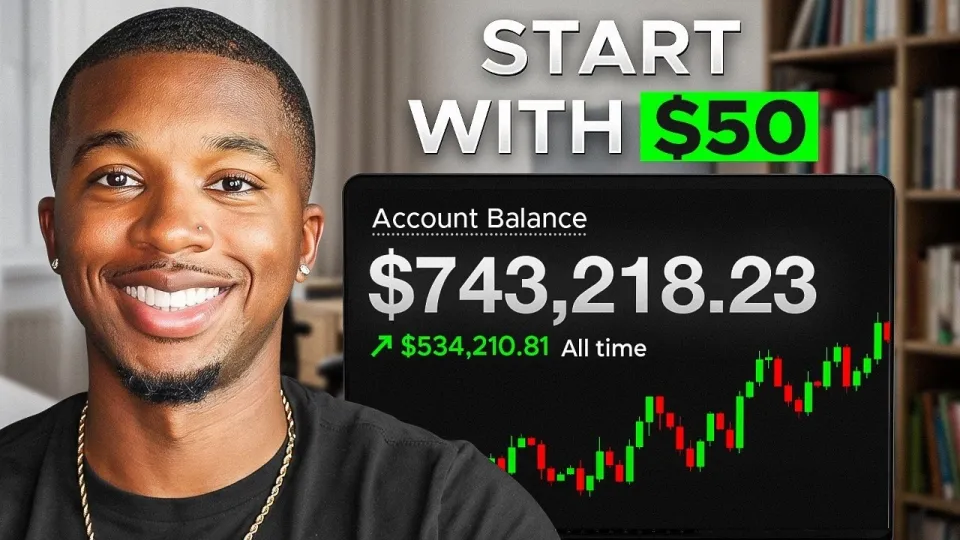
Video: Easiest Way To Start Day Trading From Scratch (Exactly What I Did)
Want articles like this for your own video to promote it on YouTube and Google? Order them through the Telegram bot @sat_sit_bot. The bot writes and publishes the articles itself (with your YouTube video embedded) on popular topical websites (no ads). Try it free: 50 articles on us.
Key takeaways
- Pick one market and one setup before risking real money — splitting attention across forex, futures and stocks slows progress for beginners.
- Trade a demo account for at least a month with backtesting before going live, since screen time builds pattern recognition faster than theory.
- Cap risk at roughly 1% of account equity per trade so a normal losing streak does not end the account.
- Funding routes like prop firms let a small account trade larger capital after passing an evaluation, but rules on drawdown and profit targets must be read first.
- A trading journal with screenshots of every entry and exit is the fastest way to separate a working edge from luck.
The easiest way to start trading from scratch is to stop looking for the perfect strategy and instead copy a repeatable beginner routine: choose one market, learn one setup, practise it on a demo account for at least a month, risk about 1% per trade, and journal every result. That is the whole framework — everything else is refinement. If you want to see the trades behind this approach, the Inner Circle is where the author of the Jooviers Gems breakdown shares his own entries.
Why most beginners fail before their first trade
Most beginners fail because they treat trading as an information problem when it is actually a repetition problem. They buy three courses, watch forty videos, open five charts and never build a single habit that can be measured.
The pattern shows up in the comments under beginner trading videos: people say the explanation finally made candlesticks click, or that an hour of structured teaching beat a week of a paid course. The lesson is not that courses are useless — it is that structure beats volume. A beginner who studies one setup for thirty days will outperform someone who studies thirty setups for one day, because only the first person can tell whether their results came from skill or from randomness.
There is a second failure mode that is easy to miss: unrealistic expectations about speed. Trading is not a lottery ticket, and the people who treat it that way usually blow up in weeks. The realistic version is boring — small position sizes, a written plan, a losing month that does not wipe you out, then a slightly better month.
The five steps that actually get a beginner trading
A workable start follows five steps in order, and skipping any of them is what turns a learning phase into an expensive one.
- Choose one market. Forex majors, index futures or a handful of large-cap stocks — pick one and ignore the rest for now. Every market has its own session rhythm, spread behaviour and volatility profile, and switching between them resets your learning curve.
- Choose one setup. A single repeatable pattern, such as a break of a prior session high, a pullback to a moving average, or a failed breakout, is enough. You are not trying to cover the market; you are trying to recognise one situation faster than other people.
- Define entry, stop and target in writing. Before you take a trade, you should be able to say in one sentence where you get in, where you are wrong, and where you take profit. If you cannot, you do not have a setup — you have a feeling.
- Backtest and demo trade. Run the setup over historical charts, then trade it on a demo account for at least a month. The goal is not profit; it is proving you can follow your own rules when nothing is at stake.
- Go live small. Start with the smallest size your broker allows. The emotional difference between demo and real money is the single biggest variable you cannot simulate.
Risk per trade and why 1% is the standard answer
Risking about 1% of account equity per trade is the rule that keeps a beginner in the game long enough to learn. On a $5,000 account that is $50 of risk per position, which on a setup with a 50-point stop means a position size of roughly one unit per point — the maths, not the market, decides your size.
The reason the number matters more than the setup at this stage is sequencing. A trader risking 1% can lose ten trades in a row and still have more than 90% of their capital and, more importantly, their confidence. A trader risking 10% per trade is out after ten losses and usually quits before the learning curve flattens.
Two practical notes. First, risk is measured from entry to stop, not from entry to target — the target is where you hope to go, the stop is where you are proven wrong. Second, once you have a losing streak, the correct response is almost never to increase size; it is to reduce it until the streak ends.
What funding and prop firms change for a small account
Prop firm funding changes the size of the account, not the skill required to trade it. The model is straightforward: you pay an evaluation fee, trade a simulated account against a profit target and a maximum drawdown, and if you pass, you trade the firm's capital for a share of the profits.
The appeal for a beginner with a few hundred dollars is obvious — you can trade size you could never fund yourself. The catch is that evaluation rules are strict and asymmetric: a daily loss limit and an overall drawdown limit usually end the account before your strategy has time to work, and many traders fail not because their setup was bad but because they sized too aggressively in week one.
If you go this route, treat the evaluation as a risk-management exam rather than a profit exam. Trade smaller than the rules allow, aim for consistent small gains, and read the payout conditions before paying any fee. The same logic applies to any broker or funded-account offer you see promoted in trading videos: the rules, not the marketing, determine whether the arrangement is useful for you.
Common beginner questions answered honestly
A few recurring worries come up again and again among people starting out, and they deserve direct answers rather than motivational filler.
- "How long until I am profitable?" There is no fixed timeline, but the sequence is consistent: weeks to learn a setup, months to trade it consistently, longer to trade it profitably through different market conditions. Anyone promising a specific number of weeks is selling something.
- "Do I need a big account?" No. A small account with strict 1% risk teaches the same habits as a large one, and funding routes exist precisely because most beginners start small.
- "Should I compare myself to traders on social media?" No. Screenshots do not show position size relative to account, the losses before the win, or how many attempts it took. Comparison to an edited highlight reel is a reliable way to abandon a plan that was actually working.
- "What if I lose my job and need trading to replace income?" Trading is a poor emergency plan because results are not linear and cannot be scheduled. Build it as a skill alongside stable income, not instead of it.
A realistic first 90 days
The first ninety days should be measured in repetitions, not dollars. Weeks one and two: pick your market and setup, and write the rules down. Weeks three to six: backtest at least a hundred historical examples and note how often the setup worked and how far price typically ran. Weeks seven to ten: demo trade live sessions, ideally at the same time of day you will actually trade, and log every trade with a screenshot. Weeks eleven to twelve: review the log, cut the worst-performing variation of your setup, and go live with minimum size.
What you are building in that period is not a strategy — it is evidence. By day ninety you should be able to answer three questions with data: how often the setup appears, how often it works, and what your average win and loss look like. If you cannot answer them, the next step is more journaling, not more capital.
Useful links
- Inner Circle — all trades from the channel
- The Edge Funder — instant funding for traders
- The Edge Funder Discord community
- Joovier on Instagram
- Recommended forex broker
The bottom line on starting trading from scratch
Starting trading from scratch works best as a routine, not a hunt for a secret strategy: one market, one setup, a demo phase of at least a month, roughly 1% risk per trade, and a journal that tells you the truth about your results. The Jooviers Gems video "Easiest Way To Start Day Trading From Scratch (Exactly What I Did)" is a useful walkthrough of that same beginner-first logic, including candlestick basics that many viewers say finally made sense after watching. If you want to follow the trades in real time rather than rebuild them from scratch, the Inner Circle gives access to the author's own entries. Treat funding offers and broker promotions as tools, not shortcuts, and give the process enough months to produce evidence before you judge it.
Source: Easiest Way To Start Day Trading From Scratch (Exactly What I Did) · Markdown version
Questions & answers
How much money do I need to start day trading from scratch?
You can start with a few hundred dollars, because the point of the first months is habit-building rather than income. What matters more is position sizing: risking about 1% per trade means a $500 account risks roughly $5 per position. If that feels too small to be interesting, the honest answer is that the account is not the problem — the expectation is.
Is demo trading a waste of time before going live?
No, but only if it is structured. A useful demo phase lasts at least a month and follows written rules, with every trade logged and screenshotted. Random clicking on a demo account teaches nothing, while a disciplined demo phase proves you can follow your own plan before real money adds emotion to the equation.
What is a prop firm and should a beginner use one?
A prop firm lets you trade its capital after passing an evaluation with a profit target and strict drawdown limits, in exchange for a share of profits. Beginners can use them, but the rules — daily loss limits and maximum drawdown — usually end accounts faster than bad strategy does. Trade smaller than the rules allow and read the payout conditions before paying any fee.
How long does it take to become consistently profitable?
There is no guaranteed timeline, but the sequence is predictable: weeks to learn one setup, months to execute it consistently, and longer to stay profitable across different market conditions. Traders who skip the repetition phase and jump between strategies tend to restart the clock every time. Consistency comes from evidence collected over many trades, not from finding a better indicator.